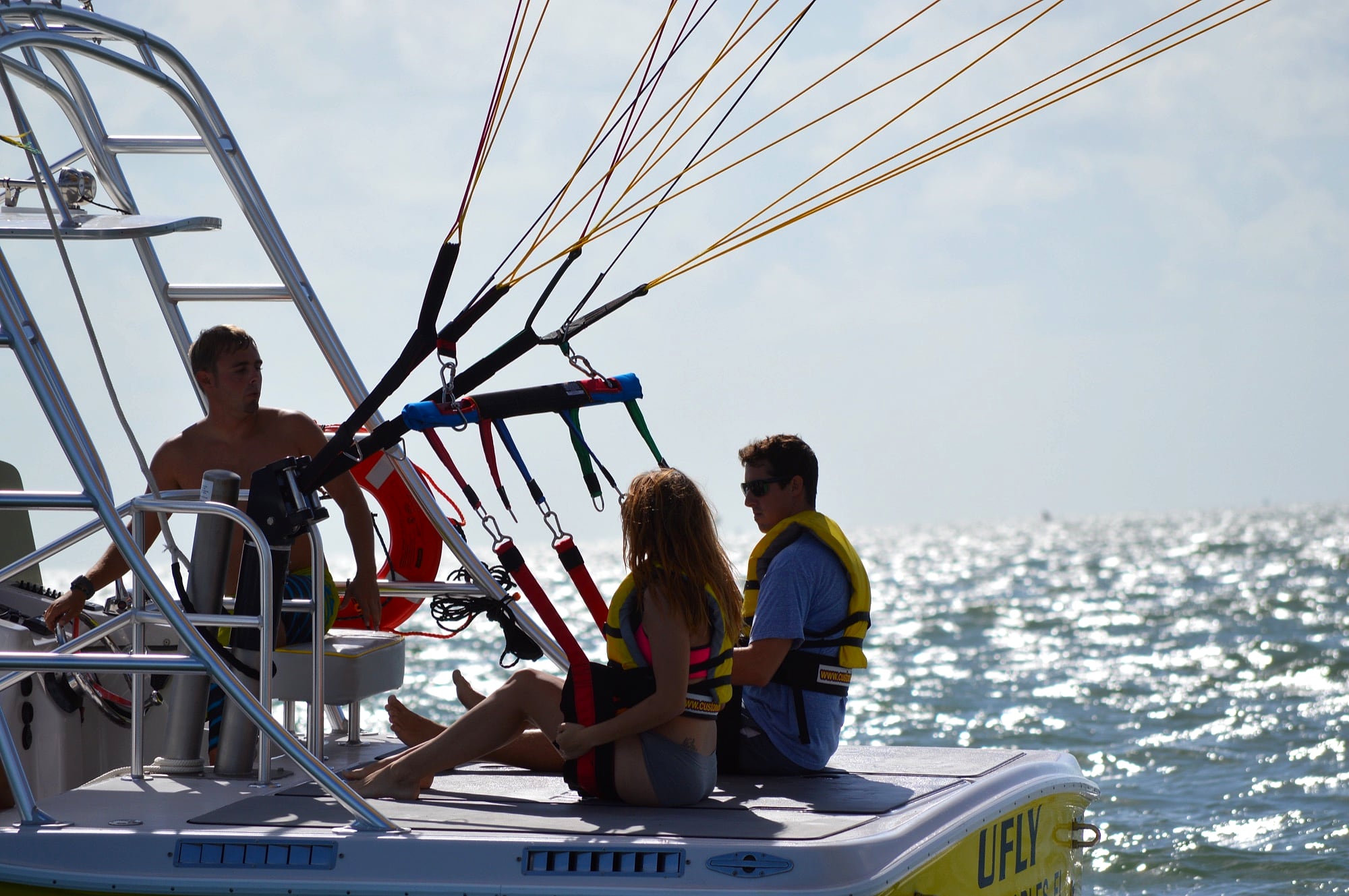
Somebody asks it at the dock almost every trip. Usually it's a mom, sometimes it's the biggest guy in the group trying to sound casual. Is this safe?
The fair answer takes more than a yes, because the yes depends on things you can actually check. So here's how we'd answer if you asked us with the boat idling behind you.
What you're actually attached to
Parasailing used to mean sprinting off a beach with a canopy behind you and hoping the timing worked out. The winch boat retired all of that decades ago. Today you're clipped into a harness on the boat's flight deck, attached to a towline on a hydraulic winch. The winch decides how fast you go up, how high you go, and how gently you come back down. You don't run, you don't jump, you don't time anything, and you can't do it wrong, because you're not doing anything. You're sitting in what amounts to a swing seat while a machine that does this all day pays out cable.
That's the fundamental safety story, and it's a mechanical one. Your entire flight is controlled from the boat, by the crew, the whole time. The flight deck is also why you never need to touch the water. Takeoff is dry. Landing is dry. The only wet part is the optional toe-dip, and only if you ask.
The rules that don't bend
Every operation has its lines. Ours are short and they're absolute.
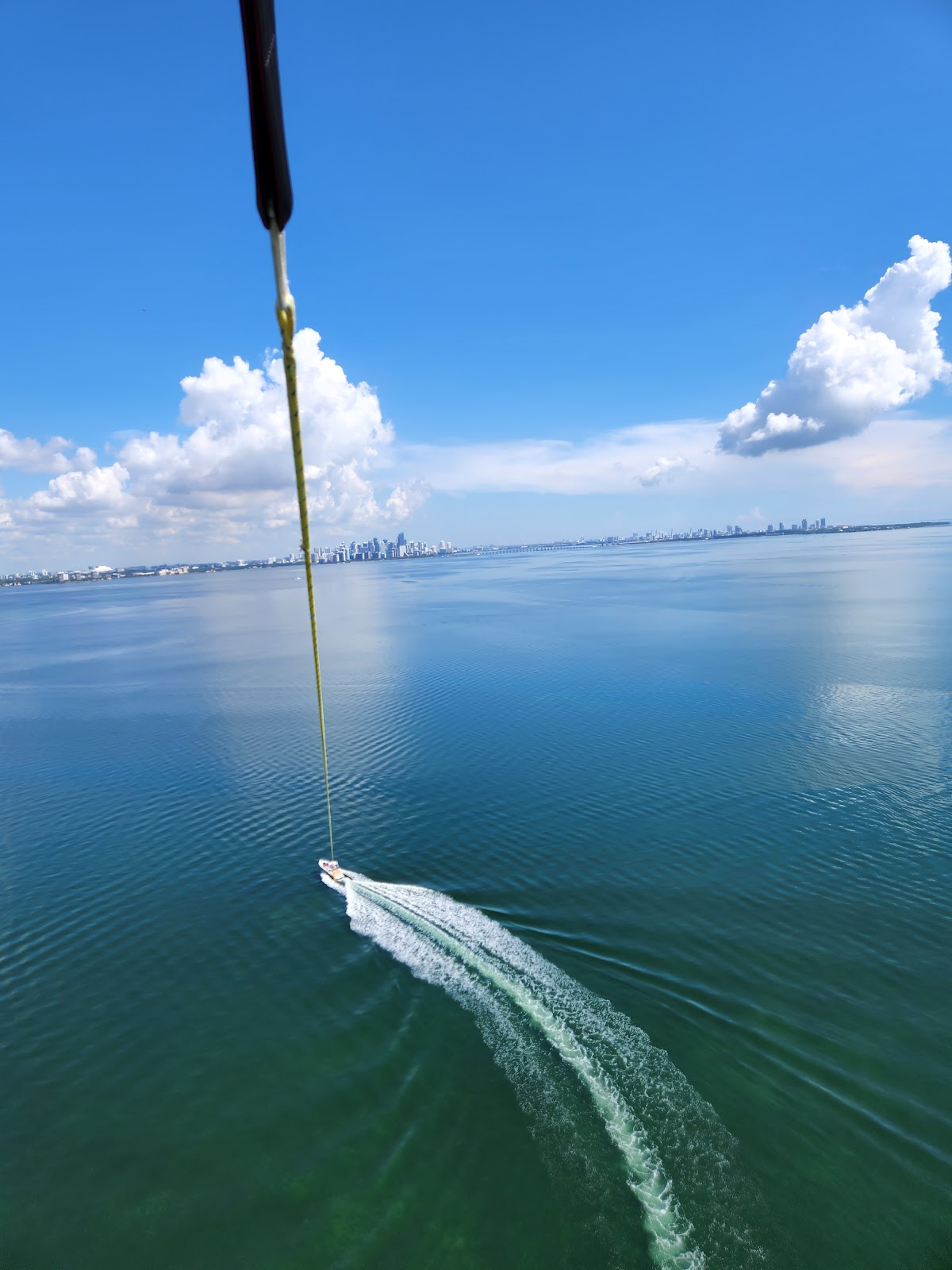
Lightning ends the day. Not lightning overhead — lightning in the area. No flight is worth it and no schedule pressure changes the answer. Light rain, on its own, usually doesn't stop a trip; summer showers roll across the bay all the time.
Wind gets a judgment call, and the captain makes it on the water, not from a booking calendar. Parasailing needs breeze — that's the lift — but gusty, shifting wind takes the day off. When a captain calls it, that's the end of the conversation.
Weight has hard numbers. The harness flies up to three people with a combined maximum of 450 pounds, and the crew confirms it before flights are assigned. On the other end of the scale, a very light solo flyer may be paired with another rider — the canopy flies properly inside a weight range, and on breezy days a light load doesn't tow right. People occasionally assume that's an upsell. It's aerodynamics.
Everyone wears a life jacket, everyone gets briefed, the minimum age is 5, and a parent signs for anyone under 18. Coast Guard licensed captain, USCG-rated vessel, every trip.
The part that surprises people
Almost everyone expects a thrill ride. What they get is closer to a hammock at altitude. The ascent is so gradual there's no stomach drop, and once the winch stops, it goes genuinely quiet — quiet enough to talk in a normal voice to the person beside you. We've watched a lot of white-knuckle grips at 50 feet turn into slack-jawed sightseeing by 200. If someone in your group is nervous, put them in a tandem next to the calmest person you've got. It works nearly every time.
The question to ask any operator
If you take one thing from this page, take this. Anywhere in the world you parasail, ask: who decides when weather cancels a flight, and what happens to my money when it does?
You want two answers. The crew decides — not the calendar, not the sales desk. And you don't lose your booking. Here, a weather cancellation becomes a marina credit that is valid for 2 years, which means our captains can scratch a marginal afternoon without a single customer losing a cent. A crew that's free to say no is the safest thing on the water, more than any piece of equipment.
If you've got a question we didn't cover, call the dock at (786) 808-1805 and ask — we answer this stuff all day and don't mind a bit. When you're ready, live pricing and availability are on the parasailing page, and the full trip walkthrough is here.
Book your Miami parasailing adventure
Member rates apply on every booking. Tax & marina fee added at check-in.
Frequently Asked Questions

About The Miami Parasail Crew
The Miami Parasail crew has flown guests over Biscayne Bay from Pier 9 at Dinner Key Marina in Coconut Grove since 2007.